






Fractale Closed Alpha: A New Open Data Platform Powered by Spatio-Temporal IDs

dattala Co., Ltd. (Headquarters: Hiroshima; CEO: Yuki Ishihara) will launch the closed alpha (invite-only) of "Fractale", a new open data integration platform that enables cross-referencing of domestic and international open data using spatio-temporal IDs, on December 17, 2025.
At Startup JAPAN 2025 Osaka, dattala will present the Fractale concept and demonstrate the closed alpha, previewing the future of next-generation open data infrastructure.
About Fractale
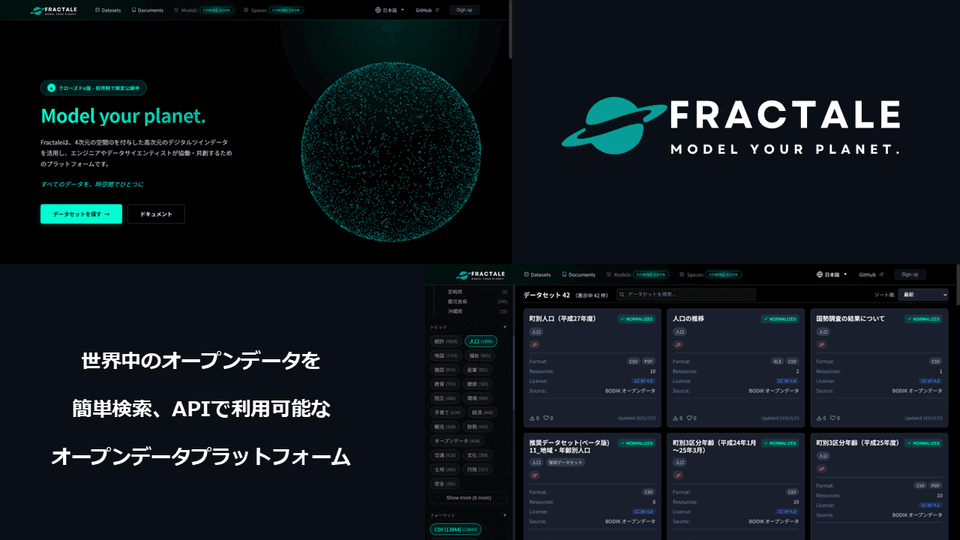
Fractale is an open data platform that lets you browse related open datasets from around the world with a single search. When you select a dataset of interest, you can access it along with metadata (source, region, period, license, etc.) in a format ready for analysis in your own environment (laptop, cloud, etc.) — immediately usable for BI tools, machine learning, and application development.
Fractale aligns with Japan's data space initiative promoted by METI, built around spatio-temporal IDs, while implementing these IDs across global open data. By assigning common "time" and "location" information to data, the result is a state where "data from different domains can be handled in the same context." This enables easy cross-analysis of information that is normally managed separately — tourism and transportation, disaster prevention and demographics, urban development and economic indicators.
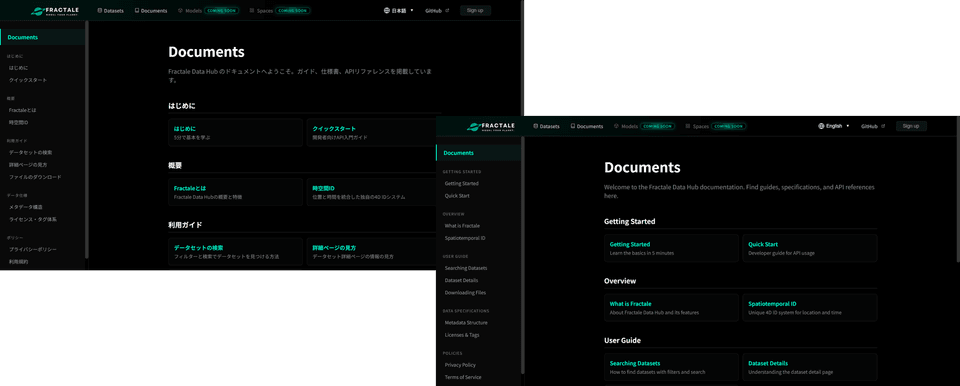
The interface and key documentation support both Japanese and English, enabling use by municipal staff in Japan and researchers and developers worldwide in the same environment. By March 2026, the roadmap includes open datasets from three countries including Japan, gradually expanding coverage to build a globally accessible data infrastructure.
Key Value Propositions
- Cross-Domain Open Data Cataloging
Organize source, scope, update frequency, and usage terms to make it easy to find the right data for your purpose.
- Access Guidance Respecting Usage Rules
Guide proper access methods and utilization tips while complying with licenses and terms of use.
- Spatio-Temporal ID-Based Data Integration Infrastructure
Assign common time and location IDs to facilitate cross-domain comparison, integration, and analysis.
Fractale is being developed not as a platform that "collects" open data in one place, but as a "next-generation data infrastructure" that safely and flexibly connects distributed data.
What the Closed Alpha Offers
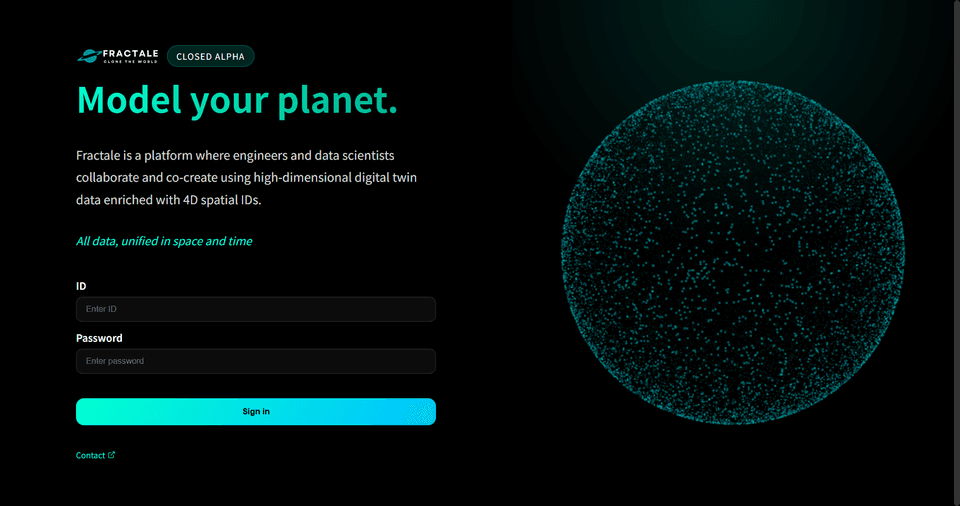
The closed alpha (invite-only) provides the following experiences:
- Cross-domain, cross-region domestic open data browsing
- Organized metadata essential for practical use — source, usage terms, expected application areas
- Normalized data download and API-based data access
Through validation close to real-world use, each iteration moves toward a more user-friendly data infrastructure.
Fractale | Closed Alpha (invite-only)
Preview at Startup JAPAN 2025 in Osaka
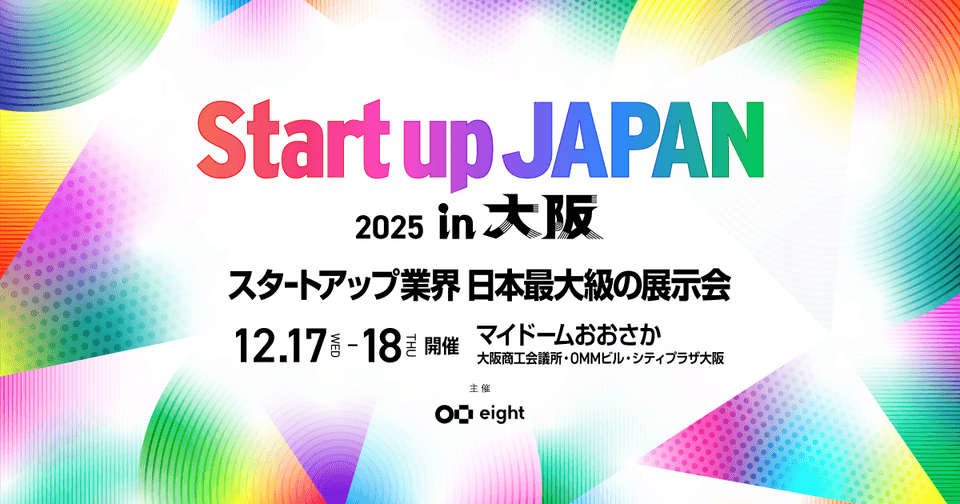
The exhibition booth will showcase Fractale's UI and concept demos alongside use case examples across tourism, urban planning, disaster prevention, healthcare, and education. The event also creates opportunities for discussion with visitors about potential co-creation projects with municipalities, enterprises, and universities.
Startup JAPAN 2025 in Osaka
Dates: December 17-18, 2025, 10:00-17:00 (tentative)
Venue: My Dome Osaka
Organizer: Eight (Sansan, Inc.)
Format: In-person only
Registration: Pre-registration required (apply here)
Future Vision — Toward a Society Where Data Connects Across Domains
Fractale transforms data that was previously handled in isolation into "combinable data" by using spatio-temporal IDs as a common axis. Cross-domain decision-making becomes more practical — analyzing the impact of tourism policies on transportation, the relationship between evacuation behavior and terrain/demographics during disasters, and tracking urban change over time.
Furthermore, integration with dattala's analysis platform Uesugi Engine will extend into more advanced analysis and visualization using data on Fractale.
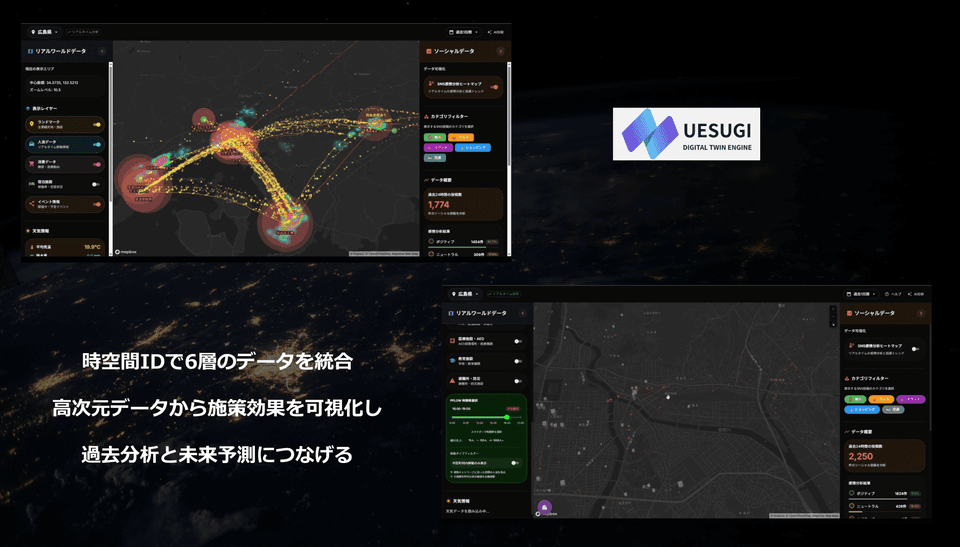
Going forward, the data infrastructure will evolve as a "Real-World OS" through:
- Expanding spatio-temporal ID-compatible open data through partnerships with national/local governments and international organizations
- Planning demonstration projects and competitions through academia-industry-government collaboration
- Adoption as data science teaching materials in education and research settings
About dattala Co., Ltd.
Guided by the mission to "bridge people and data, designing the world with technology," dattala combines AI, digital twins, causal inference, and other advanced technologies — delivering logical, evidence-based solutions to complex challenges facing businesses and society.